

The Ibn Rushd Lectures take place at irregular intervals, yet steadily. They centre on the subject of Europe and the Arab World, viewed from the most different perspectives.
How does Europe see itself, what is the Arab World’s self-perception, what do we think of each other? And how much ‘other’ are these others, or is this ‘Other’ rather a construction which has more to do with one’s own self-perception than with who the other really is? And what exactly is the potential lying in the interacting of the two cultures, what could it be like, if they defined themselves through what they have in common rather than through seemingly insurmountable differences?
The Ibn Rushd Lectures want to open up new aspects and thoughts in their particular fields, on the Arab World, Europe’s view of it and vice versa, and the respective self-perception, which may ideally become a little less self-evident through the thought-provoking impulses given by our series of lectures.
The lecture series will migrate and take up residence at a suitable place according to the repective content of the lecture; duration of stay limited the duration of the lecture. The language of the lectures will also vary, mostly between the languages we use at the Ibn Rushd Fund, so Arabic, German, English, and French.
The lectures and talks will be made available if possible on our website after each event, as a youtube-video or as mp3.
- 2019: Gaza 2020 – Ibn Rushd Lecture with Ahmed Abu Artema
- 2019: Ibn Rushd Lecture with Mohamed Hashem
- 2019: Film Screening with the Palestinian Director Sahera Dirbas
- 2019: Sudan – History, Present and Perspectives
- 2018: In celebration of Mahmoud Darwish
- 2018: Dr. Hanan Ashrawi: Peace in Palestine – can this dream still come true?
- 2018: Salam Kawakibi: Old and New Elites in the Arab World
- 2018: Freedom? On the philosophy of liberation according to M Aziz Lahbabi
- 2018: Contemporary Arab Culture: From Description to Change (Linguistic and Sociologic Perspectives)
- 2017: Womans rights and the arabic governments – Gender (in)equality
- 2017: Arab Political Thought, the Syrian Revolution & the Question of Asylum
- 2017: Libya: People, country and the current situation
- 2016: Democracy and the right of the individuals
- 2015: Carole Mansour: Not who we are
- 2013: My Makhzen and Me (Deutsch)
- 2012: Reading tour with Fadia Faqir (German)
- 2012: Ibn Rushd in His Era (German)
- 2012: Saidq Jalal Al-Azm: Secularism and the Question of Islam, Turkey as an example? (عربي)
- Climate Change and Sustainable Environment: Challenges of Environmental Media in the Arab World
 العربية DeutschClimate change is one of the biggest challenges facing humanity today, as it affects various aspects of our lives, including the environment, economy, health, […]
 - Femininity, Masculinity and their Manifestations in Contemporary Arab Culture
 What are the most manifestations of “masculinity” and “femininity” in contemporary Arab culture? How did the rising influence of social media and the 2011 uprisings impact the concepts of “masculinity” and “femininity“? We will discuss these questions in our forthcoming lecture with Dr. Amal Grami and Dr.Hanadi Al-Samman.
 - Report and Recording – Ideologies in Crisis – What are the Alternatives? short version
 العربية DeutschAn Ibn Rushd Lecture with the ex-President of Tunisia Dr Moncef Marzouki, Prof Dr Udo Steinbach and Manal Seifeldin. What distinguishes the 21st century […]
 - Report and Recording – Ideologies in Crisis – What are the Alternatives?العربية DeutschAn Ibn Rushd Lecture with the ex-President of Tunisia Dr Moncef Marzouki, Prof Dr Udo Steinbach and Manal Seifeldin. What distinguishes the 21st century […]
- Ideologies in Crisis – What are the Alternatives?العربية DeutschIbn Rushd Lecture by Dr Moncef Marzouki, President of the Republic of Tunisia from 2011-2014 To register, please use this link. Speakers and Moderators: […]
- 30.01.22 | Contemporary Challenges for Pluralism in the Islamic Context
 العربية DeutschDear Friends of Freedom of Thought, The discourse on promoting the concept of a multi-cultural society is considered an urgent endeavor to encourage plurality, […]
 - Ibn Rushd Lecture: Gaza 2020- Ahmed Abu Artema
 العربية DeutschSovereignty, the Subject and Life under Siege & what led him to initiate the Great Return March Dear friends of Freedom of Thought, in […]
 - Ibn Rushd Lecture with Mohamed Hashem
 العربية DeutschDear friends of freedom of thought, in the Arab World and elsewhere, We cordially invite you to an Ibn Rushd Lecture with the Egyptian writer […]
 - Ibn Rushd Lecture: Out Of Place (Screening)
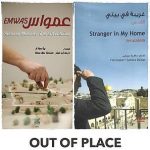 العربية DeutschDear friends of freedom of thought, in the Arab World and elsewhere, Roots are at the base of everyone’s identity, and the need to […]
 - Sudan – History, Present and Perspectives
 العربية DeutschDear friends of freedom of thought, in the Arab World and elsewhere, Sudan is a country many of us here in Germany know very […]
 - In celebration of Mahmoud Darwish
 العربية DeutschDear friends of freedom of thought, the next Ibn Rushd Lecture is a special one, complemented by recital and music, and rounded off with […]
 - Ibn Rushd Lecture: Peace in Palestine – can this dream still come true?العربية Deutschwith Dr. Hanan Ashrawi Palestine is a name for a region that has undergone dramatic change. Once sounding like a divine promise, it now […]
- Freedom? On the philosophy of liberation according to M Aziz Lahbabi
 العربية DeutschFreedom. Each language has its own special connotations vibrating along with this value, such as the famous French ‘liberté’ or the American ‘freedom’, and […]
 - Contemporary Arab Culture From Description to Change
 العربية Deutsch (Linguistic and Sociologic Perspectives) Mohammed Chawich analyses what constitutes contemporary Arab culture – its major trends and possible linguistic and social perspectives – […]
 - Womans rights and the arabic governments – Gender (in)equalityالعربية Deutsch
- Arab Political Thought, the Syrian Revolution & the Question of Asylum
 العربية DeutschDr. Housamedden Darwish Ibn Rushd Lecture on Wednesday, 26th April, at 8:00pm in the Lettrétage Berlin. The Syrian philosopher Hosamedden Darwish spoke on Critical Ideas in […]
 - Libya – the Country, its People and the Current Situation
 العربية DeutschDr. Aly Masednah El-Kothany Libya Today Libya is a country that at present appears as a blank area on the medial map. Hardly any […]
 - Ibn Rushd Lecture with Dr. Mohamed Adel Mtimet – The missing of the idividual in the Arab culture
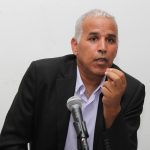 العربية Deutschthe unmentioned paradox when calling for democracy in the Arab world: On July 19th 2016 the Tunisian philosopher Mohamed Adel Mtimet held an Ibn […]
 - Carol Mansour: Not Who We AreThe Film “Not Who We Are” portrays the lives of five Syrian women with a different sociocultural background. As refugees in Lebanon, they are fighting against the brutality of their daily lives, and try to rebuild their existence that has been destryed b the war. In the film they allow us to gain an insight into their daily distress, but also into their strengths, resilience and survival instinct.
- Secularism and the question of Islam; Turkey as an Example
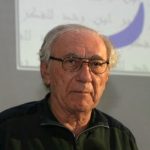 العربية DeutschBy Sadek Jalal Al-Azm: Sadek Jalal Al-Azm talking about the question of secularism and Islam. Talk organised by the Ibn Rushd Fund for Freedom […]